
On the tee
- A golf cart cannot exceed 20 mph; a low-speed vehicle tops out between 20 and 25 mph.
- Low-speed vehicles must be registered, insured and titled, and the driver needs a valid driver license.
- Golf carts may use only roads designated for them, and usually only in daylight.
In many Central Florida golf communities, the cart does not stay at the course. Residents use it to reach the clubhouse, visit neighbors, get to the community pool or run to a nearby shop. Before you buy one for that purpose, it helps to know that Florida law treats two similar-looking vehicles very differently: the golf cart and the low-speed vehicle. Choosing the wrong one can mean you are not allowed to drive where you planned, or that you are driving an unregistered vehicle on a public road.
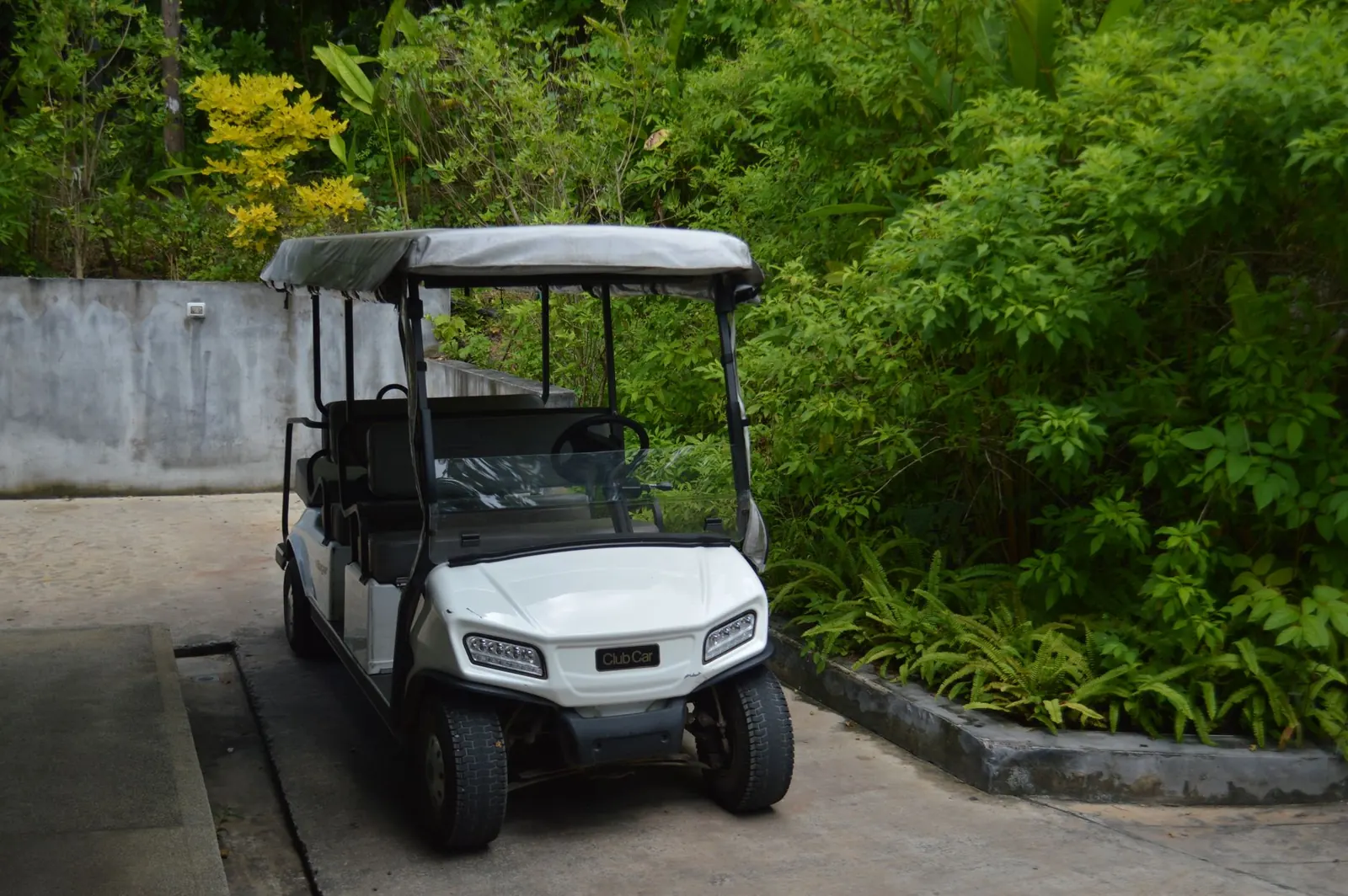
Two definitions, one big difference
Both definitions come from Section 320.01 of the Florida Statutes. A golf cart is a motor vehicle designed and manufactured for operation on a golf course for sporting or recreational purposes that cannot go faster than 20 miles per hour. A low-speed vehicle is a four-wheeled vehicle whose top speed is greater than 20 miles per hour but not greater than 25 miles per hour, including neighborhood electric vehicles, and it must meet federal safety standards.
In other words, the top speed decides the category. A cart that has been modified to go faster than 20 mph is no longer a golf cart under the definition, and it would have to meet the low-speed vehicle rules to use the road.
Side by side
| Golf cart (s. 316.212) | Low-speed vehicle (s. 316.2122) | |
|---|---|---|
| Top speed | Not capable of exceeding 20 mph | More than 20 mph, not more than 25 mph |
| Which roads | Only roads designated by the local government or state, with signs, and a few narrow exceptions | Streets with a posted speed limit of 35 mph or less; may cross faster roads at intersections |
| Hours | Sunrise to sunset, unless night use is approved and the cart has lights, signals and a windshield | No daylight-only rule in s. 316.2122 |
| Required equipment | Brakes, steering, safe tires, rearview mirror, red reflectors front and rear | Headlamps, stop lamps, turn signals, taillamps, reflex reflectors, parking brake, mirrors, windshield, seat belts, VIN |
| Registration, title, insurance | Not listed in s. 316.212 | Must be registered and insured under s. 320.02 and titled under chapter 319 |
| Driver | Under 18: learner’s license or driver license; 18 and over: government-issued photo ID | Valid driver license |
Golf carts in the community
A golf cart may run on a public road only where the road has been designated for golf carts and signs have been posted, or in one of the few other situations listed in Section 316.212, such as approved crossings of state highways. Our guide to Golf Carts on Florida Roads: What Section 316.212 Allows covers those rules in detail. If your community’s streets are privately owned, ask the association which rules apply to carts. Where the streets are public roads, the state and local rules on designated roads decide where a cart may go.
There is a specific rule for retirement communities. Section 316.2125 allows the reasonable operation of golf carts within any self-contained retirement community, as long as the carts meet the hours, equipment and driver requirements of Section 316.212, unless a county, city or the Department of Transportation prohibits it on a street under its control for safety reasons.
Low-speed vehicles
A low-speed vehicle is closer to a small car in the eyes of the law. Section 316.2122 allows it on any road where the posted speed limit is 35 miles per hour or less, and it may cross a faster road at an intersection. In return, it must carry full road equipment including seat belts and a vehicle identification number, and it must be registered, insured and titled. The driver must have a valid driver license.
Counties and cities may prohibit low-speed vehicles on roads under their control if they decide it is necessary for safety, and the Department of Transportation may do the same on its roads. So a 35 mph limit is necessary but not always enough.
Tip: Before you buy, ask the seller for the vehicle’s top speed in writing, and ask whether it is sold as a golf cart or as a titled low-speed vehicle.
Local and HOA rules
State law is only the starting point. Under Section 316.212, local governments may adopt golf cart rules that are stricter than the state’s, and they may allow carts on some sidewalks under specific conditions, including a 15 mph speed limit. Your homeowners’ association may also have rules on where carts may be parked or driven, whether they need to be registered with the association and what lights or decals they need. Breaking those rules can lead to association fines; see HOA Fines and Records in Florida Golf Communities: How Chapter 720 Protects Owners for how fines must be handled.
Which one fits your life?
- Choose a golf cart if you mostly drive to the course, the clubhouse and around designated community streets in daylight.
- Consider a low-speed vehicle if you want to use public streets of up to 35 mph, drive after dark or carry passengers who are not golfers, and you are ready to register, insure and title it.
- Check your routes first. Drive the trip in a car and look for golf cart signs and speed limits before you decide.
- Talk to your insurer. Ask how either vehicle is covered, both on the course and on the road.
For many residents, the answer is a combination of the two: a golf cart for the course and a car for everything else. Whatever you choose, keep a copy of your community’s cart rules with the vehicle. This guide summarizes Florida law and is not legal advice; for your specific situation, check with your local government, your association and your insurer.