
On the tee
- A golf cart may use a public road only where a county, city or other authority has designated it and posted signs, with a few narrow exceptions.
- Drivers under 18 need a learner’s license or driver license; drivers 18 and over need a government-issued photo ID.
- Without special approval and equipment, carts may run only between sunrise and sunset.
On a golf course, the cart is just part of the round. Off the course it is a different matter. Florida law starts from a simple position: the operation of a golf cart on the public roads or streets of the state is prohibited, except as the law allows. Those exceptions are set out in Florida Statute 316.212, and they are narrower than many visitors and new residents expect. This guide walks through them in plain language.
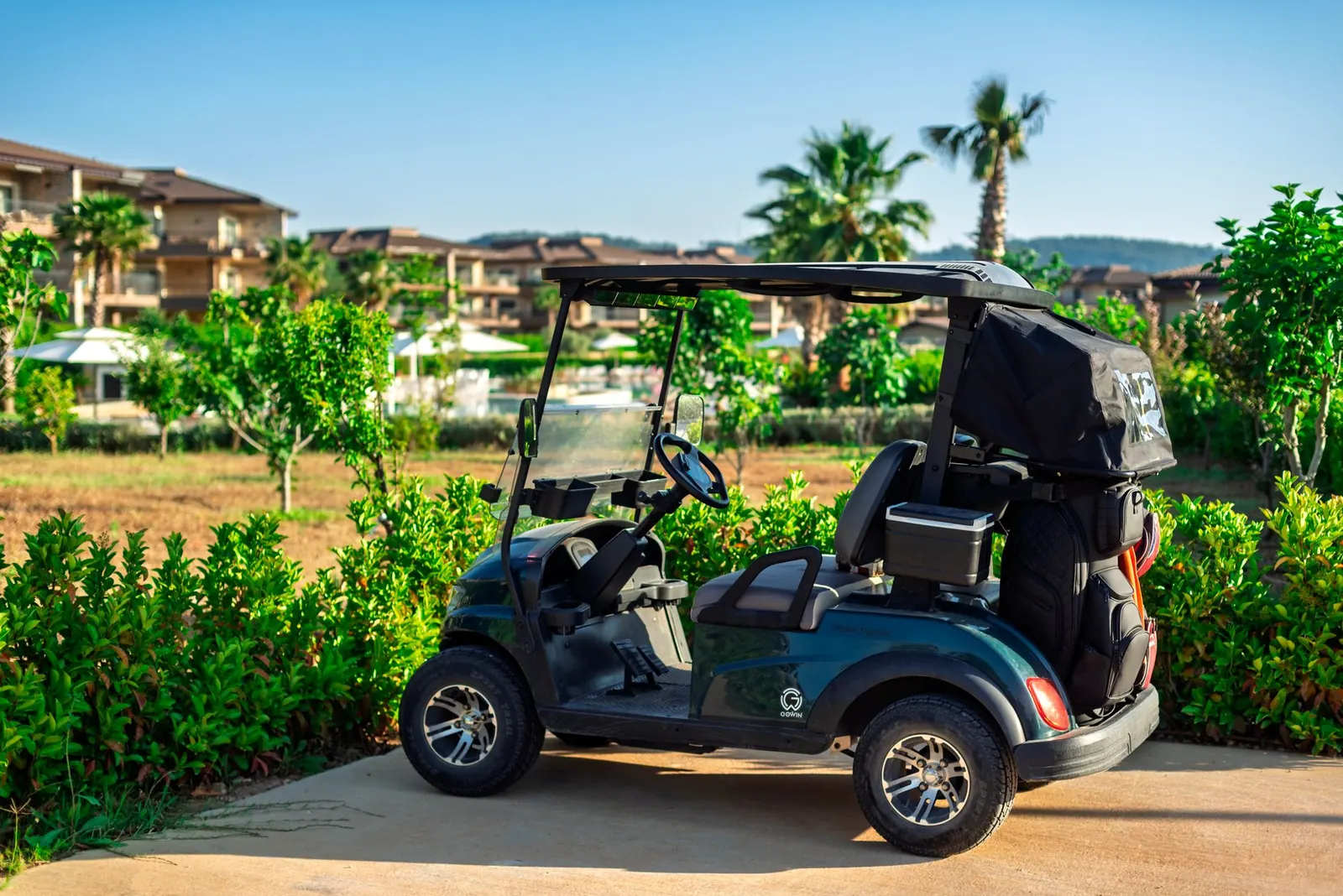
What counts as a golf cart
Florida’s vehicle law, in Section 320.01, defines a golf cart as a motor vehicle designed and manufactured for operation on a golf course for sporting or recreational purposes and not capable of going faster than 20 miles per hour. A faster vehicle, such as a low-speed vehicle that can reach 25 miles per hour, falls under different rules, including registration and insurance. Our guide to Golf Carts and Low-Speed Vehicles in Florida Communities: Which One Do You Need? explains that difference.
Where a golf cart may go
Under Section 316.212, a golf cart may be driven on a public road only in these situations:
- A designated local road. A county road designated by the county, a city street designated by the city, a two-lane county road inside a city that the city designates, or a road owned by a water control district and designated by it. Before designating a road, the local government must decide that carts can travel or cross it safely, considering the speed, volume and character of traffic, and then post signs.
- Crossing a state highway. A cart may cross a part of the State Highway System where it meets a designated county road or city street, or at midblock where a golf course lies on both sides of the highway, but only if the Department of Transportation has reviewed and approved the crossing.
- Certain state roads being transferred to local government, if the Department of Transportation decides carts will not impede traffic and posts signs.
- Mobile home parks divided by a road, to cross between the two parts at an approved crossing, for residents and guests of the park.
- State park roads with a posted speed limit of 35 miles per hour or less, if the state’s Division of Recreation and Parks allows it.
The signs matter. On a designated road the responsible government must post signs showing that golf carts are allowed. If you do not see them, do not assume the road is open to carts.
When a golf cart may run
The default rule is daylight only: golf carts may be operated only between sunrise and sunset. A local government can allow night use, but only if the cart is equipped with headlights, brake lights, turn signals and a windshield.
Equipment every road-going cart needs
| Required at all times on public roads | Also required to drive after sunset (where allowed) |
|---|---|
| Efficient brakes | Headlights |
| Reliable steering | Brake lights |
| Safe tires | Turn signals |
| A rearview mirror | A windshield |
| Red reflectorized warning devices on the front and rear |
Who may drive
The driver rules are the part many families miss. Under the current text of Section 316.212, a person under 18 may not drive a golf cart on public roads or streets unless they have a valid learner’s driver license or driver license. A person 18 or older must have a valid form of government-issued photo identification. These rules apply on public roads; they do not govern driving on the golf course itself, where the course’s own rules apply.
Tip: If you are renting a cart for a vacation home or a community, ask the rental company which roads nearby are designated for carts, and carry ID every time you drive.
Local rules can be stricter
Section 316.212 lets local governments pass ordinances that are more restrictive than the state rules on golf cart operation and equipment. When they do, they must post signs or otherwise tell residents. Local governments may also allow carts on sidewalks next to certain streets, but only after considering safety and consulting the Department of Transportation. Such an ordinance must limit carts on the sidewalk to 15 miles per hour, and next to state highways the sidewalk must be at least 8 feet wide.
What happens if you break the rules
A violation of Section 316.212 is a noncriminal traffic infraction. Driving where carts are not allowed, or outside the permitted hours, is treated as a moving violation. Missing equipment or driving without the required license or ID is treated as a nonmoving violation. Either way, a citation is an unwelcome end to a round, and a cart is no match for a car if something goes wrong.
Retirement communities
A separate section, 316.2125, allows the reasonable operation of golf carts within self-contained retirement communities, as long as the carts meet the equipment, hours and driver rules above, unless a county, city or the Department of Transportation prohibits it for safety. We cover this in more detail in the community guide linked above.
This guide summarizes the statute and is not legal advice. Local rules differ from place to place across Central Florida, so check with the city or county where you plan to drive.