
On the tee
- Florida rules make it unlawful to intentionally feed or entice an alligator.
- A first violation of the feeding rules carries a $100 civil penalty; repeat violations involving alligators become crimes.
- A ball at the water’s edge is not worth the risk. Take a drop and play on.
Why the water matters
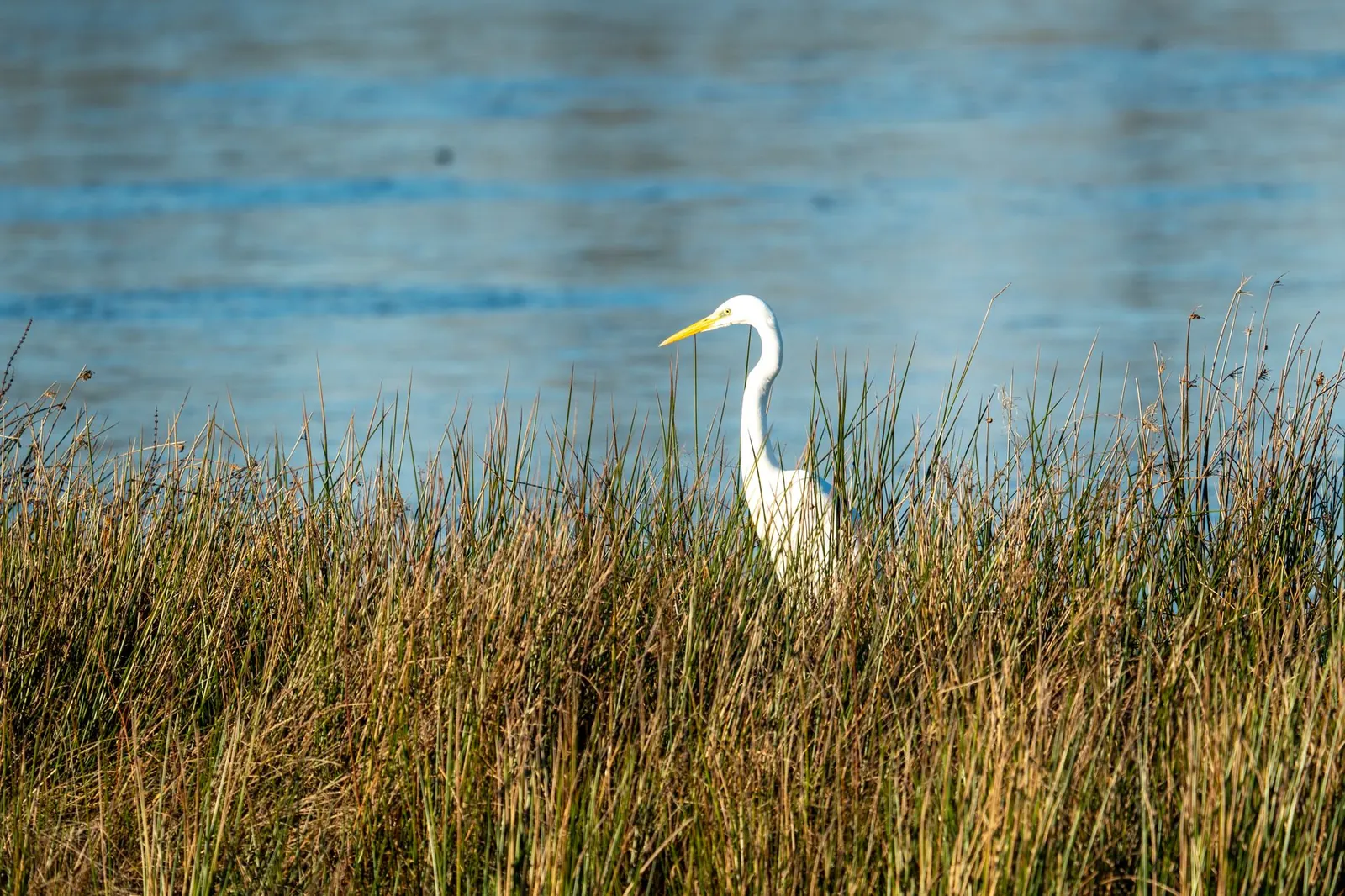
Golf courses around Orlando are built on low, wet ground, and almost every one of them has ponds, lakes, canals or wetlands woven through the holes. That water collects the rain from summer storms and gives the courses their character: the egret stalking the shallows, the turtle on the bank, the reflection of palms on a calm morning. It also means you share the course with wildlife, including the American alligator. Most encounters are nothing more than a sighting from a respectful distance, and that is exactly how it should stay.
This guide explains what Florida law says about feeding alligators and sets out common-sense habits for playing near the water. For anything that looks like a real threat, the course staff and Florida’s wildlife agency are the people to call.
What the law says about feeding
The Florida Fish and Wildlife Conservation Commission’s rule on the subject is short. Rule 68A-25.001 of the Florida Administrative Code says that no person shall intentionally feed, or entice with feed, any crocodilian unless it is held in captivity under a permit. Alligators are crocodilians, so that covers throwing food to one from a bridge, leaving snacks on the bank or tossing the rest of a sandwich into a pond.
The penalties are set by Florida Statute 379.412, which covers rules against feeding wildlife. They rise quickly when alligators are involved:
| Violation | Penalty under s. 379.412 |
|---|---|
| First | Noncriminal infraction with a $100 civil penalty; a person who goes to court may be fined not less than $100 |
| Second (all involving bears or alligators and other crocodilians) | Misdemeanor of the second degree |
| Third | Misdemeanor of the first degree |
| Fourth or later | Felony of the third degree |
The statute also says that a person who refuses to accept a citation, fails to pay the civil penalty or fails to appear in court when required commits a misdemeanor of the second degree. The reason for the strict approach is practical: an alligator that learns to link people with food loses its natural wariness, and that is when it becomes dangerous.
Habits for playing near water
- Leave balls at the edge. If your ball finishes near the water, especially in reeds or long grass on the bank, take the penalty drop or a new ball. No score is worth reaching into an alligator’s space.
- Keep your distance. If you see an alligator, give it plenty of room and do not approach it for a photo, however calm it looks.
- Never feed any wildlife. Beyond the legal rule for alligators, feeding birds and fish near a pond can draw alligators in as well.
- Watch children and pets. Keep young players close and away from the bank. If a community or course allows dogs, keep them on a leash and away from the water.
- Stay on the fairway side of the pond. Walking along the bank to look for balls puts you where wildlife rests.
- Tell the staff. If an alligator is on a tee, a green or a path, or seems to be approaching people, stop and let the golf shop know.
Tip: Treat every pond as a water hazard in both senses. Play it as the rules say, and keep your feet on the dry side of it.
If an alligator seems a threat
Most alligators on golf courses are simply living there, and a sighting is not a reason to call anyone. If an animal is behaving aggressively, will not leave a busy area or seems to be losing its fear of people, tell the course staff. Courses and community associations deal with these situations and know how to reach the Fish and Wildlife Conservation Commission, the state agency responsible for alligators. Do not try to move, scare off or catch an alligator yourself.
The other neighbors
Alligators get the attention, but they are only part of the wildlife on a Central Florida course. Wading birds such as egrets and herons fish the shallow edges, turtles bask on the banks, and some courses have larger birds that stroll the fairways. One Kissimmee course in our Courses mentions sandhill cranes on its own website. Enjoy them from a distance and let them have the right of way; a bird on the green can wait for a moment while you line up your putt.
Snakes are also part of the Florida landscape and tend to stay in cover such as long grass, brush and reeds. That is another good reason not to go searching for lost balls in thick vegetation near the water.
Water and storms
One more reason to keep away from the water comes from the weather. The National Weather Service advises anyone caught outside in a thunderstorm to get out of and away from ponds and lakes. If you hear thunder, head for a building, not along the pond bank. Our guide to Lightning on the Golf Course: What to Do When Thunder Rolls in Orlando explains what to do.
Living next to a course means living next to this wildlife every day. If you are thinking of buying a home on the water, see Buying a Home in a Florida Golf Community: The Disclosure Summary and Other Documents for the questions to ask.